
Unglinga kit scientifique 6 constructions, dès 8 ans
4.7(30 avis)
L'avis Un Jeu Pour ToutComment nous évaluons →
Fait relier construction et observation avec six modèles, dont un système astronomique et un générateur à manivelle.
De 8 à 14 ans selon le fabricant ; les montages les plus complexes nécessitent parfois une aide adulte.
Points forts
- Six projets de construction
- Livret illustré en couleur
- Astronomie et mécanique abordées
À savoir
- Montage parfois long
- Aide utile sur certaines étapes
Parfait si votre enfant aime comprendre un mécanisme après l’avoir assemblé.
Passez votre chemin si vous cherchez un seul appareil déjà monté et prêt à fonctionner.
Conseil de parent : Commencez par le modèle astronomique : faites expliquer les mouvements avant de démonter et passer au générateur.
À partir de24.99 €
Achetez au meilleur prix
Amazon
Meilleur prix
24.99 €
Description
Ce coffret Unglinga propose six constructions scientifiques à réaliser l'une après l'autre. Parmi elles, un modèle Soleil-Terre-Lune et un générateur à manivelle montrent deux façons de comprendre un phénomène en manipulant un objet. Le livret en couleur guide les assemblages. L'enfant doit identifier les pièces, suivre un ordre et parfois revenir sur une étape lorsqu'un mécanisme ne bouge pas comme prévu. Avec le modèle astronomique, on peut observer la position relative des astres. Avec le générateur, tourner la manivelle permet de relier un mouvement à un effet produit par le montage. Le fabricant recommande 8 à 14 ans. La difficulté peut varier d'une construction à l'autre : un adulte sera utile pour lire un schéma ou corriger une pièce mal placée.
- Catégorie
- Maquettes, miniatures et modélisme · Sciences et observation
- Âge recommandé
- 8 ans - 14 ans
- Dimensions
- 25 × 19.5 × 7.8 cm
- Poids
- 0.55 kg
Le meilleur prix du moment
Prix et disponibilité vérifiés en direct sur Amazon.
Pour le même âge


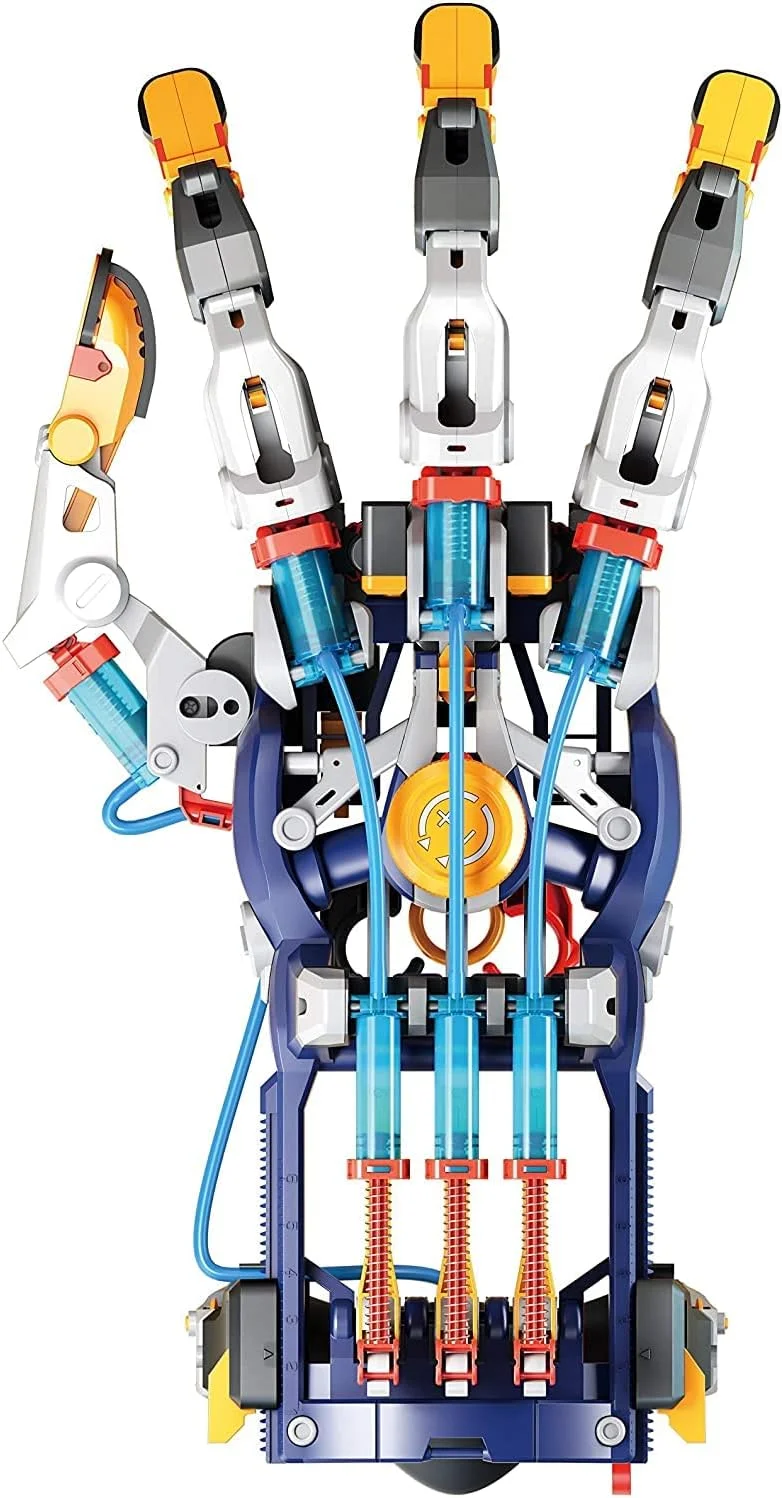
Construct & Create, main robotique hydraulique 203 pièces
8 ans - 16 ans4,4(2 348)
31,45 €Voir les avis




Conseils et avis
Comment utiliser Unglinga kit scientifique 6 constructions, dès 8 ans
Commencez par regarder les six projets et choisissez celui qui demande le moins d'étapes. Étalez les pièces avant de suivre le livret illustré. Pour le modèle Soleil-Terre-Lune, demandez à votre enfant de montrer quel astre tourne autour de quel autre. Pour le générateur, comparez deux vitesses de manivelle. Prévoyez une séance par construction et gardez les pièces de chaque modèle séparées. Prenez une photo avant le démontage pour faciliter la prochaine manipulation.
Le meilleur prix du moment
Prix et disponibilité vérifiés en direct sur Amazon.
Objectifs d'apprentissage
Ce que ce jouet aide à développer
Résolution de problèmes
Analyser le problème
Comprendre ce qui est demandé et les contraintes
Mécanique
Montages et démontages
Assembler et démonter des pièces mécaniques
Autres objectifs
Planification
Anticiper les étapes
Prévoir l'ordre des actions pour atteindre un but
Notre article qui en parle
Ce jouet est cité dans un de nos guides, avec le contexte qui aide à décider.
Derniers avis clients
Ce qu'en disent les acheteurs
Lise
@lise
5.0Grandson found it challenging and fun. Very proud of himself
AmazonKunde
@amazonkunde
5.0Macht Spaß
Amazon Customer
@amazoncustomer
5.0Science and maths are my 10-year-old’s favourite subjects, so this was right up her street. She does have quite a low attention span though, and even activities she’s genuinely interested in can lose her surprisingly quickly if they’re too open-ended. What works particularly well for her with this set is how structured everything is. There’s a clear project to complete, instructions to follow and an actual finished model at the end, and that managed to hold her attention brilliantly. There are six different STEM projects to build, covering different areas of science, engineering and mechanics. They include things such as a Sun-Moon-Earth model and a hand-operated generator, so there’s enough variety that she isn’t essentially repeating the same activity six times. She absolutely loved working her way through them. Following the instructions, finding the correct components and gradually watching each collection of pieces turn into something that actually works gave her lots of little milestones along the way. That structure seems to suit her perfectly because she’s concentrating on one achievable step at a time rather than being faced with a box of materials and simply told to create something. I also really like that the main components are laser-cut wood. It makes the finished projects feel much more substantial than the little disposable plastic experiments we’ve encountered in some children’s science kits. Some of the connections can be quite snug, though, and the thinner wooden pieces obviously need treating with a little care rather than forcing them together. The recommended age range is 8-14 and I think that’s fairly sensible. At 10, my daughter could do plenty herself, although having an adult nearby for an occasional tricky connection is useful. For her, figuring things out is part of the enjoyment, so I tried very hard not to become that parent who takes over the entire project! Best of all, the learning isn’t just written in a booklet for her to read. She’s physically building something and then seeing the scientific principle working in front of her. The hand-operated generator is a great example because turning a mechanism and seeing that movement produce electricity to illuminate the LED makes the concept far more tangible. This has been absolutely brilliant for her. She loved making and building each project, and I loved seeing something educational hold her attention for so long without her feeling as though she was doing schoolwork. For a child who already loves science and maths but benefits from activities having plenty of structure, this has been an excellent fit. Lire la suite
Chelo
@chelo
5.0Genial
Leonardo
@leonardo
5.0TUTTO MOLTO BENE
Amazon · Meilleur prix24.99 €
Voir le prix